A recent study by researchers from the SponBIODIV researchers led by the Museo Nacional de Ciencias Naturales (MNCN-CSIC) has studied the connectivity and adaptation of a sponge that is very common in the waters of the North Atlantic and the Arctic and forms sponge grounds. Specifically, it is the potato sponge, Geodia hentscheli, a very slow-growing and highly vulnerable species to human disturbances such as trawling or rising temperatures. For this research, published in Molecular Biology and Evolution, samples of the potato sponge were taken at depths ranging from a few meters to nearly 3,000 meters throughout its known distribution, which extends from Canada to the Arctic. After analyzing more than 100 samples, the team has determined that the situation of these sponges is worrying due to factors related to human activity that puts these organisms at risk and can have severe consequences on deep-sea ecosystems, causing a very negative cascading effect for many other organisms.
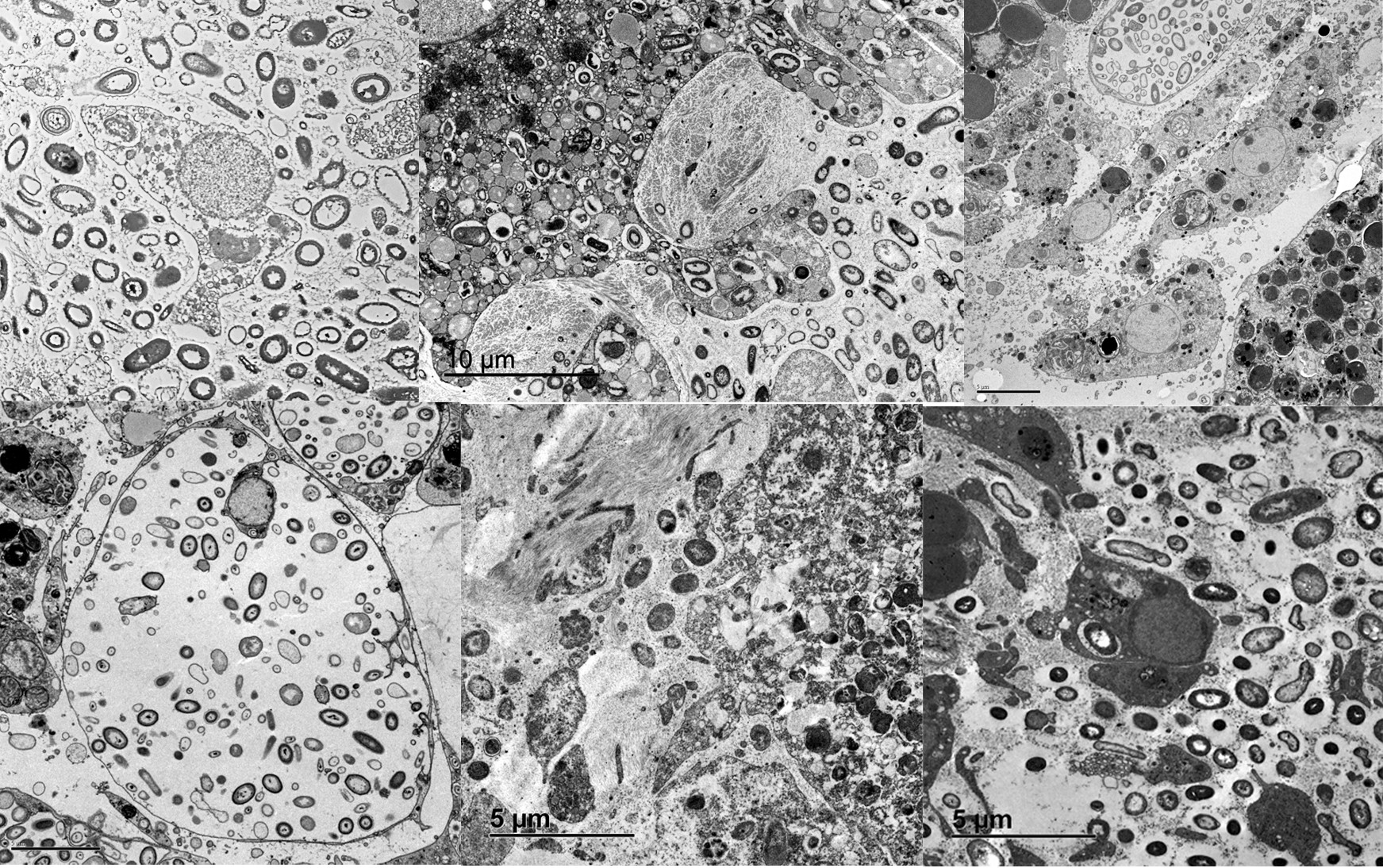
Cutting-edge genetic tools such as massive sequencing and transcriptomics allowed them to determine that samples of G. hentscheli are genetically connected throughout their entire distribution, despite being separated by more than 6,000 km. This interconnection occurs in part thanks to prevailing oceanographic currents The main current connecting populations of this sponge is the AMOC (Atlantic Meridional Overturning Circulation), a system of ocean currents that transports warm water from the tropics to the North and returns cold water to the South, which plays a crucial role in regulating the climate in the Northern Hemisphere and Europe. The weakening of the AMOC, detected in recent oceanographic studies, in addition to adding uncertainty to the climate, could have difficult-to-predict effects on species like G. hentscheli, whose populations depend on these ocean currents to connect with each other. This lack of connectivity could lead to the isolation of some populations, which could lead to their local extinction.Their results also confirmed clear genetic isolation between populations found below and above 1,300 m depth. This genetic isolation is caused by environmental factors such as pressure and salinity, which are significantly different below and above this depth. The data obtained indicate that sponges are perfectly adapted to living in these environments with such different environmental conditions, both at the level of the sponge itself and at the level of the microbes that live in symbiosis within sponges.This pioneering research in deep-sea marine ecosystems could have important implications for the conservation of extremely fragile habitats such as sponge grounds.
Reference:
Taboada S, Díez-Vives C, Turon M, Arias MB, Galià-Camps C, Cárdenas P, Koutsouveli V, de Carvalho FC, Kenchington E, Davies AJ, Wang S, Martín-Huete M, Roberts EM, Xavier JR, Combosch D, Riesgo A (2025) Connectivity and adaptation patterns of the deep-sea ground-forming sponge Geodia hentscheli across its entire distribution. Molecular Biology and Evolution. 6:msaf145 (https://doi.org/10.1093/molbev/msaf145)