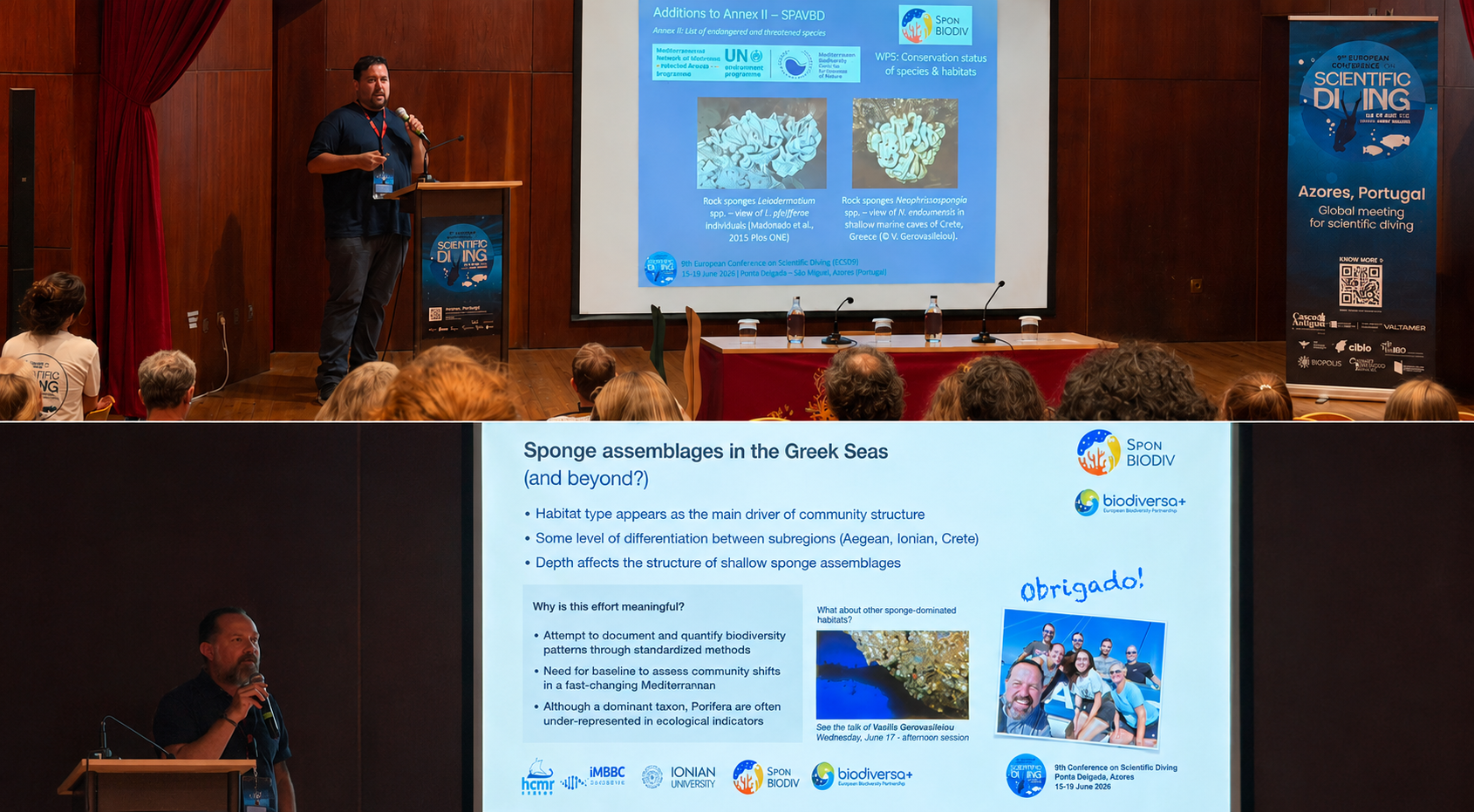
Rock sponges, also known as “lithistids”, are desma-bearing demosponges characterized by their heavily silicified skeletons. They are typically found in bathyal environments and shallow marine caves in warm and tropical regions. A recent study by SponBIODIV researchers provides new insights into the ecological significance and vulnerability of these sponges in the deep waters of the Eastern Mediterranean Sea.
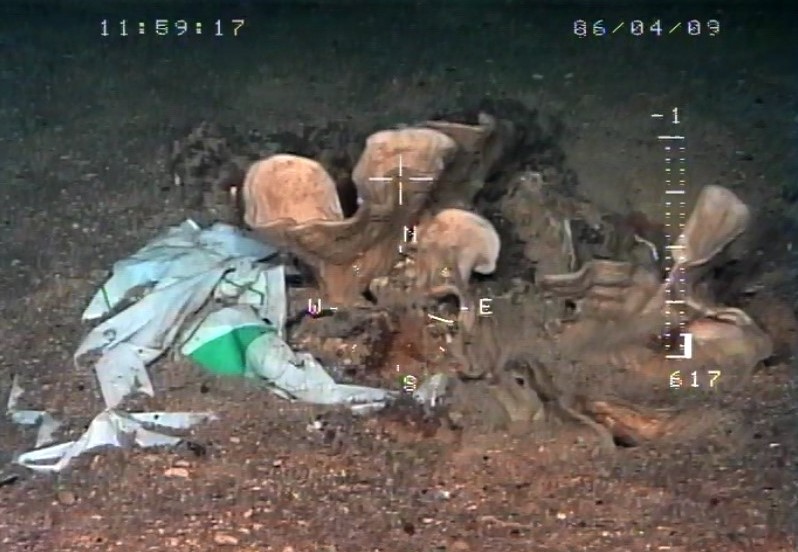
With their three-dimensional, foliose body structure, rock sponges act as ecosystem engineers, offering habitat and substrate for fish, crustaceans, and various sessile invertebrates. However, this complex morphology also increases their susceptibility to human-induced disturbances. This was illustrated by the discovery of plastic litter entangled in sponge aggregations at a depth of 617 meters!
The limited data available on these vulnerable sponge communities—combined with growing anthropogenic pressures in deep-sea ecosystems—underscores the urgent need for comprehensive mapping, long-term monitoring, and targeted conservation efforts.
Reference:
Gerovasileiou, V., Smith, C.J. & Mytilineou, C. (2025). Vulnerable rock sponges in the under-studied deep Eastern Mediterranean. Marine Biodiversity. 55, 43. https://doi.org/10.1007/s12526-025-01525-0